Table of contents
¿Did you know the benefits of virtual medicine? Shortly, doctors may prescribe a virtual beach holiday to calm aches and pains as alternative medications. Insurance companies may offer scenic tours of the Northern Lights to lower blood pressure, instead of doubling up on drugs. A psychiatrist may treat social phobia by inviting patients to a virtual dinner party for counseling and behavior modification. The hospital may immerse children in a fantastic playground while they receive chemotherapy.
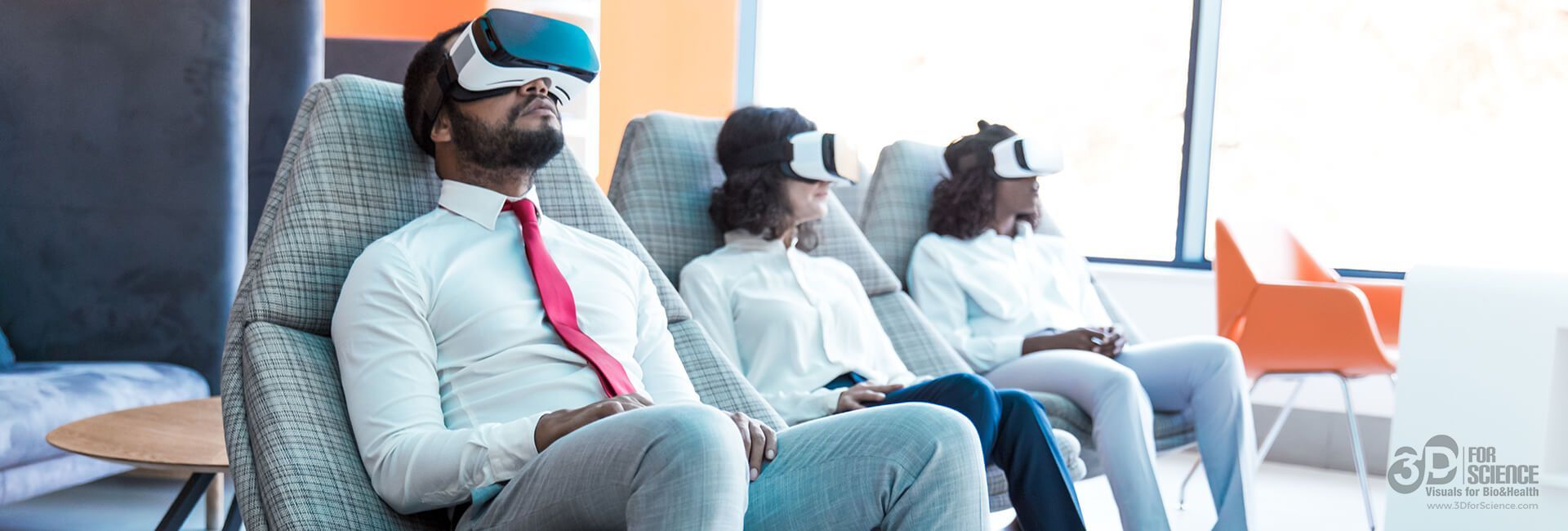
These advances began to appear thanks to Virtual Reality (VR), the mind-bending computer technology that nudges our brains into thinking we are elsewhere. By combining a series of different technologies, including head-mounted displays (HMD) with head-tracking systems, headphones for sound/music and noise-canceling, as well as manipulation/navigation equipment, virtual reality technology creates the feeling of entering a realistic three-dimensional world.
Are you interested in modular content and omnichannel materials?
Advantages and limitations of Virtual Medicine
For decades, scientists have been studying the health benefits of including burn injuries to stroke to post-traumatic stress disorder. The literature shows that VR can reduce pain, control anxiety and improve mental health in a variety of situations.
However, the technology has was too expensive, unreliable and clumsy to translate beyond the scope of academic journals and doctoral dissertations. Now, with the advent of low-cost, portable and high-quality VR headsets and software, this situation is changing, all of which support a new discipline called therapeutic VR.
Get this free Guide with
5 key steps for The Digital Transformation
of Scientific Communication
Patient acceptance
In many clinical studies, most patients find VR is a pleasant and positive experience, which can at least alleviate anxiety and distress related to the disease. Most of them said that if given the opportunity, they would choose to use VR again. Indeed, in general, younger patients are more willing to use VR than older patients.
Future perspective of Virtual Medicine
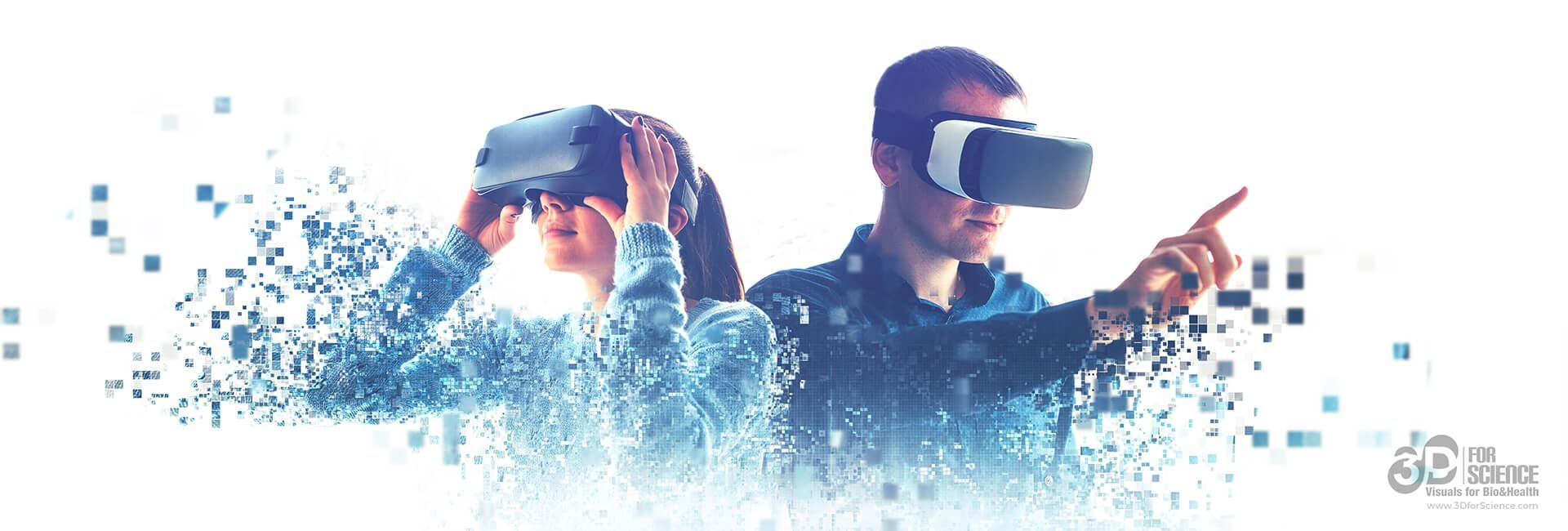
Although VR is still very new, it has great potential for pharmaceutical applications. With further research, more data about its efficacy in this field and other advantages and disadvantages will be obtained.
As technology advances, costs and other obstacles will decrease, likely increasing VR’s influence as a viable and helpful tool in clinical, research, education, and patient consulting practices in the pharmacy.
3DforScience
3DforScience is a scientific communication company specialized in digital content for the pharma and biotech industries. Our passionate creative team works alongside an in-house scientific team to provide cutting-edge medical animations, scientific illustrations, virtual reality, etc.
Our extensive experience within the field ensures all the content we produce is scientifically accurate, innovative, engaging, and pitched at the right level for the target audience.
Would you like to bring your scientific messaging to life? Contact us. We would love to help you create something unique