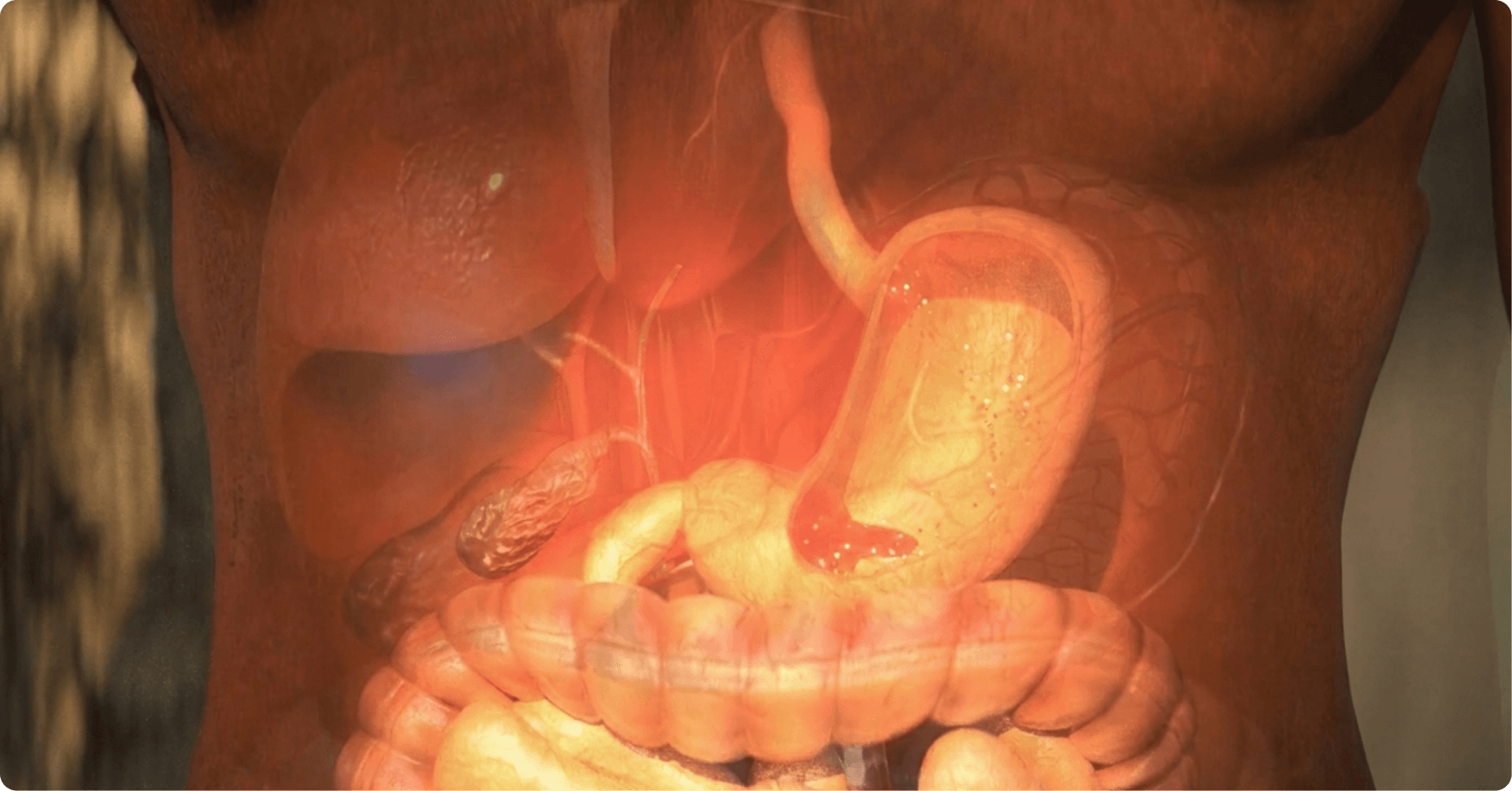
A rare disease is, by the European definition, one that affects fewer than 1 in 2,000 people. Individually rare, but there are more than 7,000 identified rare diseases, and together they affect around 300 million people worldwide, which is roughly the population of the United States.
Around 70-80% of them are genetic in origin, which places rare diseases at the very centre of the cell and gene therapy revolution.
And that creates a very particular communication problem. Each rare disease comes with its own gene, its own broken protein, its own cascade of consequences, and almost no pre-existing public understanding to build on. Explain diabetes and your audience arrives with context. Explain a lysosomal storage disorder and you’re starting from zero, often with families who need to understand it deeply, fast, because they’re about to make treatment decisions.
That is where 3D animation earns its place. When you can show the missing enzyme, the substrate piling up inside the cell, and the therapy restoring what was lost, a disease that no one has heard of becomes a story anyone can follow.
Are you interested in modular content and omnichannel materials?
What Makes Rare Diseases So Hard to Explain
Most rare diseases live at the molecular level. A single misspelled letter in a gene, a protein that folds wrong, a receptor that never reaches the cell surface. The visible symptoms, muscle weakness, developmental delay, organ damage, are often the distant downstream echo of an event happening inside individual cells.
That gap between cause and symptom is exactly what static materials struggle with. A pedigree chart can show inheritance, and a pathway diagram can name the affected enzyme, but neither can connect the invisible molecular failure to the lived reality of the disease. And rare disease communication has to work for wildly different audiences at once: clinicians who may have never treated the condition, payers evaluating a therapy for a handful of patients, regulators reviewing novel mechanisms, and families with no scientific background who deserve to genuinely understand what’s happening.
Animation bridges that gap because it can move fluidly between scales, from the DNA variant to the cell, from the cell to the tissue, from the tissue to the patient, in a single continuous visual narrative.

Get this free Guide with
5 key steps for The Digital Transformation
of Scientific Communication
The Diagnostic Odyssey
Ask any rare disease family about the “diagnostic odyssey” and they’ll know exactly what you mean. The average patient waits four to five years for an accurate diagnosis, seeing multiple specialists and collecting misdiagnoses along the way. The rarer the disease, the fewer clinicians who recognise it, and the longer the journey.
This makes disease awareness and education a genuinely clinical issue, not just a marketing one. A neurologist who has seen a clear visual explanation of a condition’s early presentation is simply more likely to recognise it in the clinic. The same applies to newborn screening programmes, genetic counselling, and referral pathways: understanding accelerates diagnosis, and in progressive diseases, time is function.
Static slides can list red-flag symptoms. What they can’t do is show why those symptoms appear, the motor neuron degenerating, the substrate accumulating, the signalling pathway going quiet. Animated visuals can, and that’s why rare diseases have become one of the areas where scientific animation delivers the most tangible impact.
Spinal Muscular Atrophy: A Story Worth Seeing
Take spinal muscular atrophy (SMA), historically the leading genetic cause of infant mortality. The story starts with a single missing or faulty gene, SMN1, which means motor neurons can’t produce enough survival motor neuron protein. Without it, the neurons that connect the spinal cord to the muscles progressively die, and the muscles, receiving no signal, weaken and waste.
What makes SMA remarkable is how completely treatment has rewritten that story. In less than a decade, three different modalities arrived: an antisense oligonucleotide that coaxes a backup gene (SMN2) into producing functional protein, a gene therapy that delivers a working copy of SMN1 in a single infusion, and a small molecule that does the splicing correction orally. Children who would not have survived infancy are now walking.
Each of those mechanisms is elegant, and each is invisible. 3D visuals can show the splicing machinery skipping an exon, the AAV vector reaching the motor neuron, the SMN protein returning and the neuromuscular junction coming back to life. For a physician choosing between modalities, a payer weighing a one-time therapy, or a parent trying to understand what an infusion will actually do inside their child, that visual clarity isn’t a nice-to-have. It’s the difference between informed decisions and blind trust. Watch our spinal muscular atrophy (SMA) interactive deck with 3D visuals here.
How can 3DforScience help you?
3DforScience is a scientific communication company specialising in 3D animation and visual content for the life science sector. We are a creative team of scientists, marketers, artists, and animators with one shared goal: helping you communicate complex science in a way people actually remember.
In rare diseases, that might mean a MoA video for a gene or enzyme replacement therapy, a disease awareness piece to shorten the diagnostic journey, patient and caregiver education materials, or visual assets for advisory boards, congresses, and payer discussions. Each project is built with your medical and scientific teams, so the result is accurate, regulator-ready, and adapted to the channels where your audiences already are.
Would you like to bring your scientific messaging to life? Contact us. We would be pleased to create something unique for you.
What rare disease topics can be visualised with MoA animation?
Practically all of them: disease mechanisms, MoAs for gene, cell, and enzyme replacement therapies, inheritance patterns, natural history, and diagnostic pathways.
Can medical animations help with disease awareness and earlier diagnosis?
Yes, and it’s one of their most valuable roles. Clear visual explanations help clinicians recognise conditions they’ve rarely seen, which can shorten the diagnostic odyssey.
How long does production of a medical explainer video take?
It depends on complexity and length, but we typically aim for 6-8 weeks to guarantee both scientific accuracy and high-quality storytelling.