Table of contents
Scientific communication plays a crucial role in disseminating knowledge, securing funding, and enhancing the social impact of health research. However, scientific communicators face numerous challenges in this field, from building trust to simplifying complex concepts. In an increasingly competitive media landscape, addressing these scientific communication challenges is essential for effectively reaching audiences. This article explores the main obstacles and provides strategic approaches to overcome them, ensuring clear, credible, and engaging communication.
Are you interested in modular content and omnichannel materials?
Key Challenges Faced by Scientific Communicators
- Loss of trust in science:
One of the biggest obstacles is the growing distrust of scientific institutions. According to a Pew Research Center study, only 29% of Americans have a great deal of trust in scientists to act in the public’s best interest. This erosion of trust makes it difficult for scientific messages to be received positively. - Complexity of scientific topics:
Communicating complex scientific concepts in an accessible way without losing rigor is a major challenge. A study by the National Science Foundation revealed that only 28% of American adults have a level of scientific literacy considered sufficient.

- Information overload and misinformation:
In the digital age, the proliferation of information sources makes it difficult to stand out. Additionally, misinformation spreads rapidly. According to an MIT report, false news on Twitter spreads 6 times faster than true stories. - Pressure for immediate results:
There is increasing pressure to communicate results quickly, which can lead to exaggerating preliminary findings. A study published in PLOS ONE found that 47% of press releases about biomedical research contained exaggerations. - Lack of communication skills:
Many scientists lack training in effective communication. A Nature survey revealed that 86% of researchers believe they should participate more in public debate, but only 37% have received any kind of communication training.
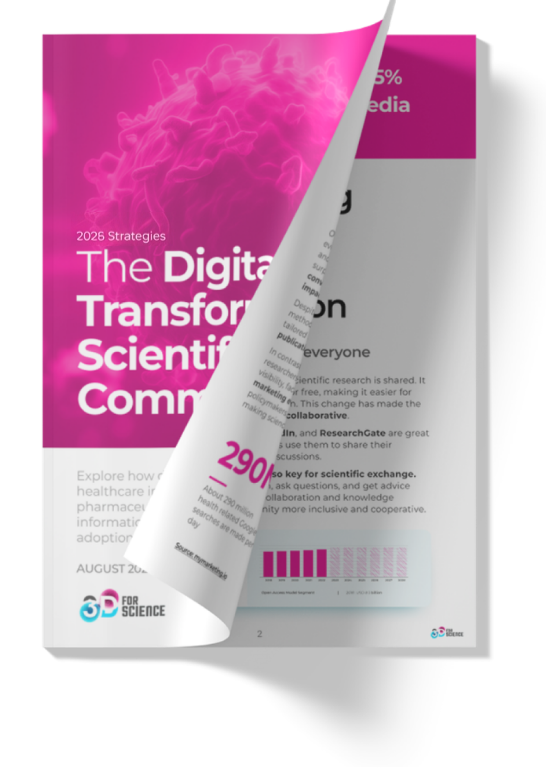
Get this free Guide with
5 key steps for The Digital Transformation
of Scientific Communication
Effective Strategies to Overcome Communication Challenges
- Build trust through transparency:
To regain trust, it is essential to be transparent about scientific processes, including limitations and uncertainty. The American Association for the Advancement of Science (AAAS) recommends communicating not only the results but also the scientific method and research context. - Adapt the message to the target audience:
Using storytelling techniques and analogies can make complex concepts more accessible. A study published in PNAS showed that the use of narratives increases retention of scientific information by 40%
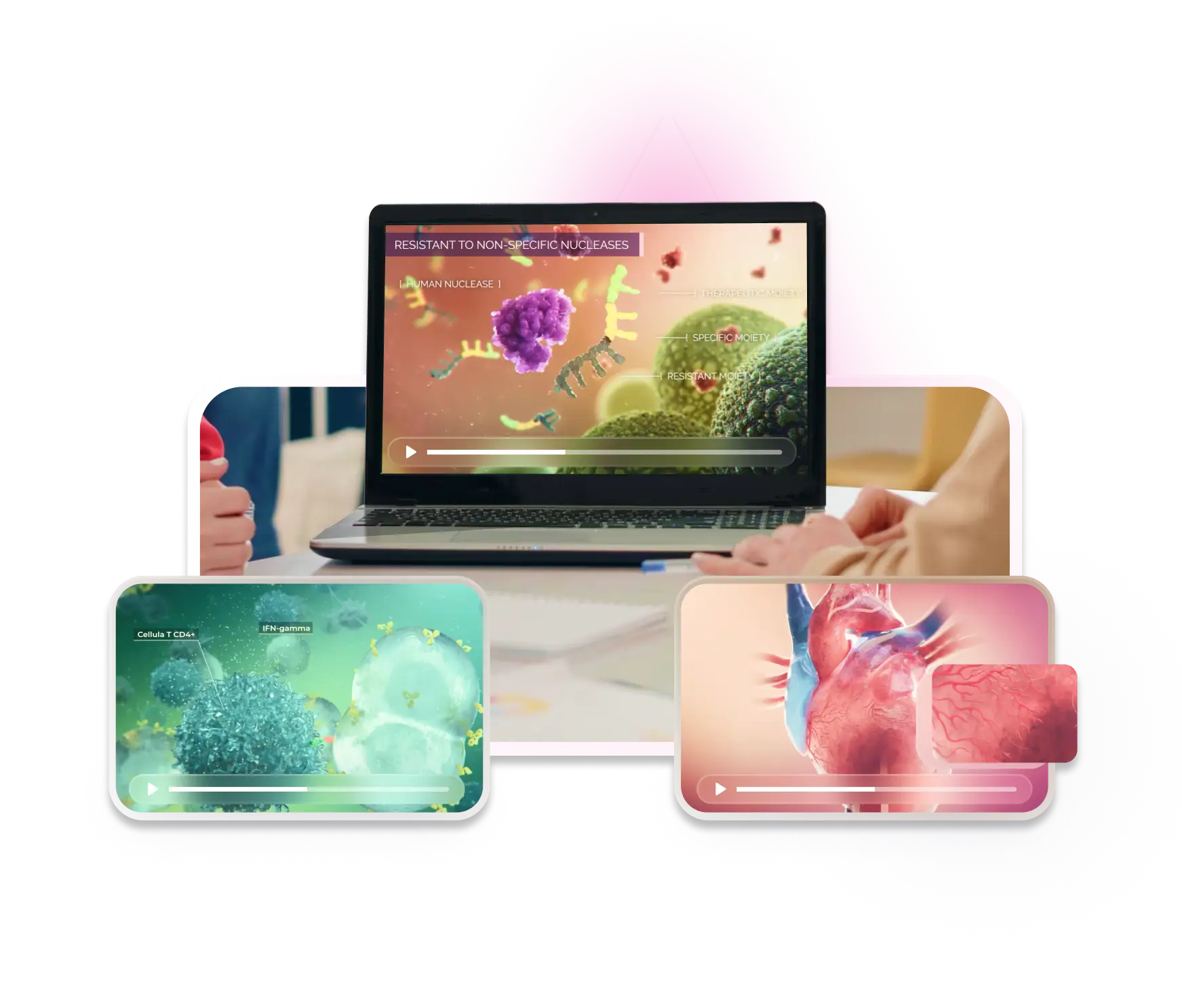
- Leverage social media and multimedia formats:
Digital platforms offer opportunities to reach wider audiences. According to the National Center For Biotechnology Information, 57% of consumers said that a hospital’s social media presence would strongly influence their choice regarding where to go for services. - Collaborate with influencers and opinion leaders:
Partnering with respected influencers in the scientific field can amplify the reach of the message. An Edelman study found that 63% of consumers trust influencers more than brand advertising. - Invest in scientific communication training:
Providing researchers with communication skills is crucial. The National Institutes of Health (NIH) offers scientific communication training programs that have been shown to improve scientists’ ability to interact with the media and the public. - Use data visualizations and 3D animations:
Visual representations can make complex information more understandable. The use of 3D animations in medical presentations increases information retention by a higher percentage than traditional methods.

- Establish strategic alliances:
Collaborating with patient organizations, academic institutions, and media can expand the reach and credibility of scientific messages. Use multi-sector alliances to increase the impact of public health initiatives. - Measure and optimize impact:
Using engagement metrics and sentiment analysis can help refine communication strategies. Publishing scientific articles and getting them widely shared on social media have a higher likelihood of being cited in academic literature.
Conclusion: The Importance of Strategic Scientific Communication
Effective scientific communication is essential for the advancement of health research and its impact on society. By adopting a strategic approach that addresses current challenges, scientific communicators can significantly improve public understanding of science, increase research support, and ultimately contribute to better health outcomes.
At 3DforScience, we are aware of this and believe that the key lies in combining scientific rigor with innovative communication techniques, constantly adapting to new technologies and platforms, and maintaining an open and transparent dialogue with diverse audiences through appropriate digital tools and resources. With these strategies, scientific communicators can overcome obstacles and play a crucial role in building a more informed and healthy society.