Table of contents
- Tackling Neurocysticercosis with TUM
- Cupido: Targeting Cardiovascular Disease with The Cupido Project
- Highlighting the Capabilities of IBBTEC
- Exploring Spintronics: Fundamentals and Applications (Zernike Institute for Advanced Materials)
- Artificial Leaf: A Mini-Factory for Drugs (Eindhoven University of Technology)
- Driving Innovation Through Collaboration
Medical animations are at the heart of 3DforScience’s partnerships with universities, serving as a cornerstone of our mission to transform complex research into impactful visual narratives. By joining forces with academic institutions worldwide, we bring groundbreaking discoveries to life through innovative storytelling techniques. These collaborations not only amplify the reach of scientific findings but also make them accessible and engaging for broader audiences. Here are some of the fascinating projects we’ve had the honor to work on with leading universities and research centers.

Are you interested in modular content and omnichannel materials?
Get this free Guide with
5 key steps for The Digital Transformation
of Scientific Communication
Tackling Neurocysticercosis with TUM
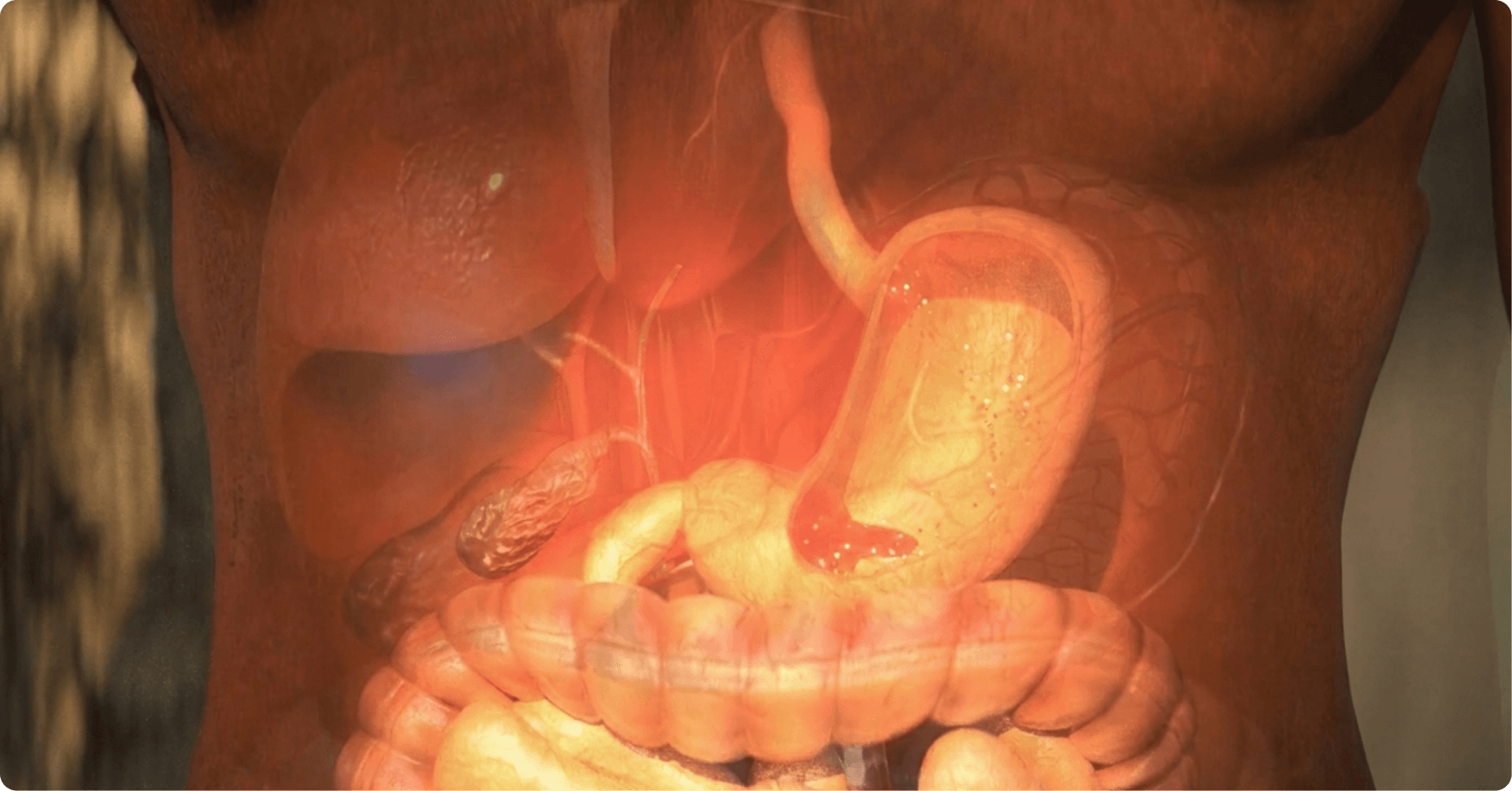
In collaboration with the Technical University of Munich (TUM), we created a detailed 3D animation to explore the impact of Taenia solium, a parasitic infection that causes neurocysticercosis. This condition can trigger epileptic seizures due to immunological reactions caused by cysticerci in the brain.
The animation vividly illustrates the life cycle of the parasite and its pathological effects, offering a clear and engaging explanation of this complex disease. This tool has been instrumental in raising awareness among healthcare professionals, researchers, and the general public, fostering a deeper understanding of the condition and its implications for global health.
Cupido: Targeting Cardiovascular Disease with The Cupido Project
The Cupido Project, led by the National Research Council of Italy (CNR) in collaboration with 12 partners, represents a groundbreaking step in cardiovascular treatment. The project focuses on developing inhalable nanoparticles capable of delivering therapy directly to diseased heart tissue.
Our animation visualizes the mechanics of these nanoparticles, which are a million times smaller than a grain of sand. It showcases how this non-invasive delivery method could revolutionize cardiovascular care. Cupido’s multidisciplinary consortium includes renowned institutions like Charité – Universitätsmedizin Berlin, Imperial College London, and Simula Research Laboratory.
Highlighting the Capabilities of IBBTEC
The Instituto de Biomedicina y Biotecnología de Cantabria (IBBTEC) is at the forefront of biomedical research in Spain, offering advanced services such as massive sequencing, optical microscopy, and drug analysis. To help IBBTEC communicate its unique value, we created a corporate video that showcases its cutting-edge facilities and capabilities.
The video not only highlights the technical resources available at IBBTEC but also emphasizes its commitment to fostering collaboration with external researchers and companies. This visual narrative has become a cornerstone of IBBTEC’s outreach efforts, attracting partnerships and promoting the institute’s role as a leader in biomedical innovation.
Exploring Spintronics: Fundamentals and Applications (Zernike Institute for Advanced Materials)
In partnership with the Zernike Institute for Advanced Materials at the University of Groningen, we developed an animation that dives into the field of spintronics. This cutting-edge area of research focuses on harnessing the spin of electrons for applications in data storage and computing.
Through our animation, we simplified complex concepts, making this revolutionary technology accessible to a wider audience and highlighting its potential to transform the future of computing.
Artificial Leaf: A Mini-Factory for Drugs (Eindhoven University of Technology)
One of our most innovative projects involved collaborating with researchers working on the Artificial Leaf, a device that mimics photosynthesis to produce drugs. This mini-factory uses sunlight and microchannels to trigger chemical reactions, creating medicines in remote locations.
Through our 3D animation, we illustrated how the device works and its potential applications, such as producing malaria drugs in the jungle or paracetamol in space. This visual storytelling has been essential for communicating the groundbreaking possibilities of this technology to investors, academics, and policymakers.
Driving Innovation Through Collaboration
In 3DforScience, we know that 3D medical animations are an invaluable tool for pharmaceutical and biotech marketing. By simplifying complex concepts, increasing engagement, and enhancing credibility, animations contribute to more effective communication and greater acceptance of products and services.