Table of contents
Scientific communication grows and evolves alongside science itself, having undergone a radical transformation in recent decades, driven by the convergence of technology and the need to share knowledge more efficiently and effectively. Social media, online publishing platforms, and data visualization tools have revolutionized the way scientists interact, collaborate, and disseminate their findings. However, this constant evolution presents new challenges and requires ongoing adaptation from researchers.
Are you interested in modular content and omnichannel materials?
Trends in Scientific Communication
Some of the effective trends that have been adopted in recent years include:
1.- Data Visualization: Transforming complex data into visually appealing representations has gained increasing importance. Infographics, animated videos, and interactive visualizations help communicate scientific concepts more clearly and concisely.
2.- Virtual Reality (VR) and Augmented Reality (AR): New ways to experience science. Virtual reality immerses users in simulated scientific environments, while augmented reality overlays digital information onto the real world, enriching the learning experience.
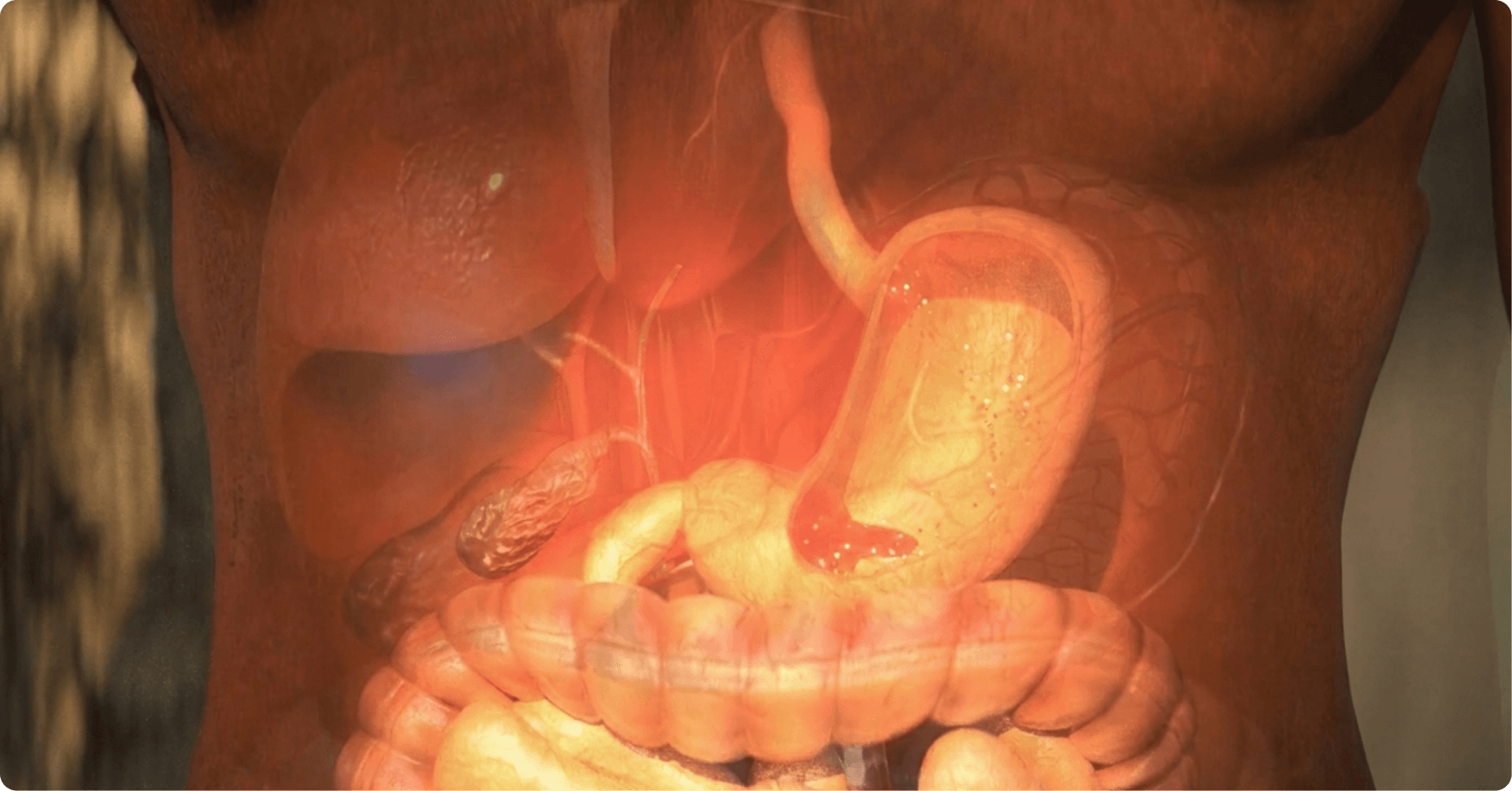
3.- 3D Medical Animation: In the field of biomedicine, 3D animations completely change the way complex biological processes are explained, allowing visualization of molecular structures, simulation of diseases, and more effective communication of research results.
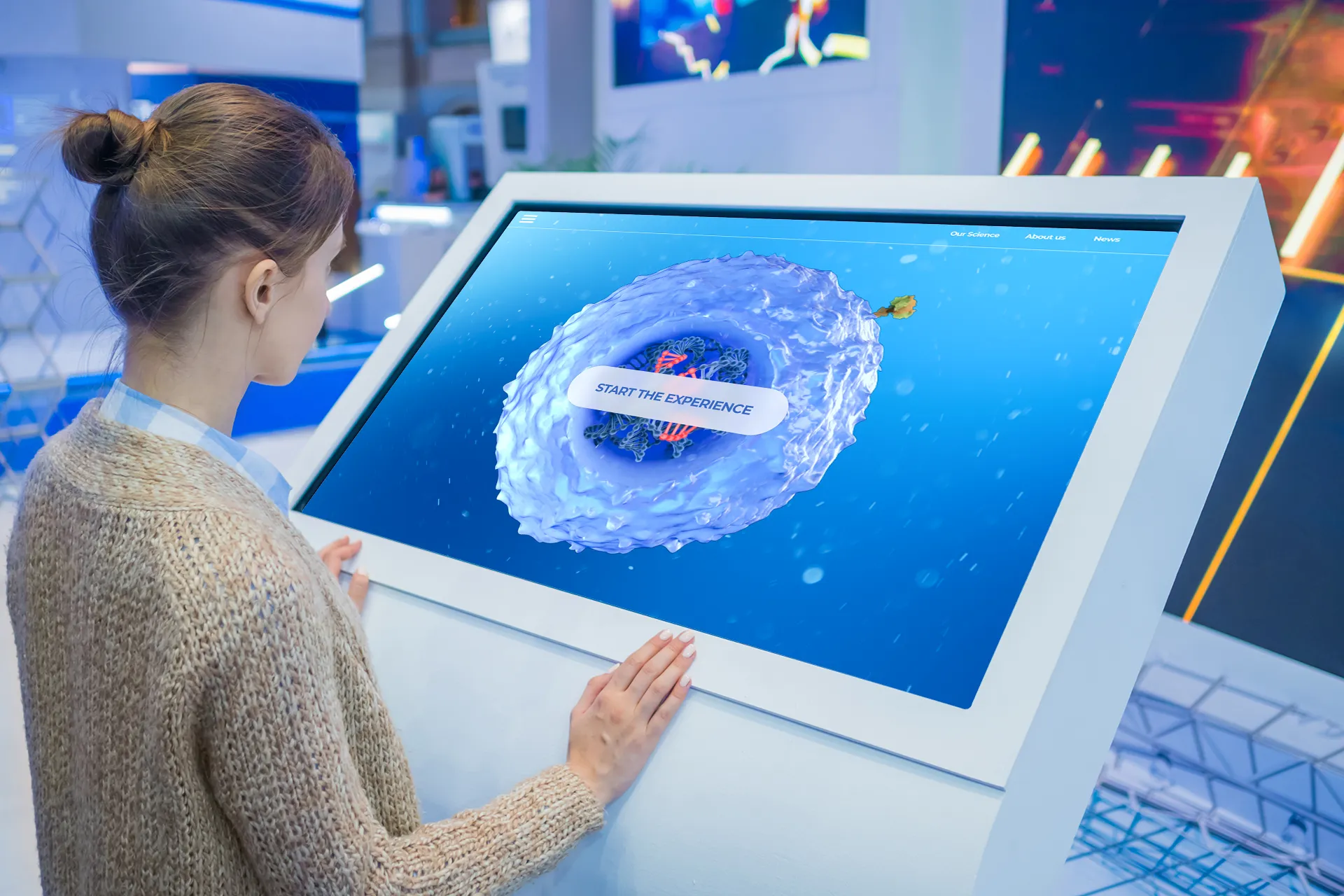
4.- Scientific Storytelling: Scientists are adopting narrative techniques to make their research more accessible and engaging to a broader audience. Personal stories, anecdotes, and metaphors can help connect with the reader’s emotions and generate greater interest.
5.- Artificial Intelligence (AI): AI is now an indispensable tool in scientific communication, enabling task automation and personalization of user experiences. Chatbots, virtual assistants, and recommendation algorithms are changing how researchers find and consume information.
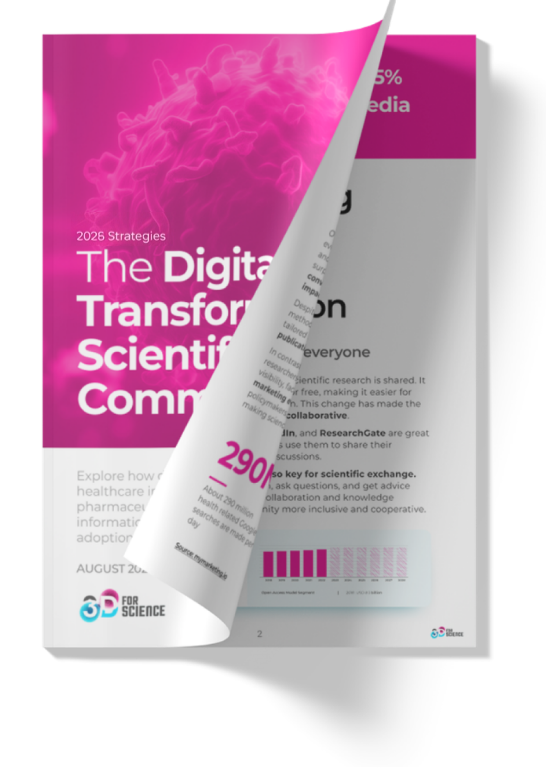
Get this free Guide with
5 key steps for The Digital Transformation
of Scientific Communication
The Problem: Being Outdated in Communication Technologies
Failing to stay updated with the latest communication and scientific marketing technologies poses a problem that leads to a loss of relevance and effectiveness in research dissemination. The technological gap can result in scientific findings not reaching their intended audiences, including other scientific disciplines, media, and the general public.
This disconnection can lead to:
-
Reduced Impact and Visibility: The lack of integration of advanced technologies can result in important research not receiving the attention it deserves, thus reducing its impact on the scientific community and the public.
-
Inefficiency in Communication: Traditional communication methods may be ineffective at conveying the complexity of discoveries, leading to misunderstandings or a complete lack of comprehension.
-
Competitive Disadvantages: As new communication methods become highly competitive, institutions that do not adopt new technologies may fall behind those that do, affecting their ability to attract funding, collaboration, and talent.
Solutions for Innovative Communication and Scientific Marketing
Scientific marketing offers a range of strategies and tools to effectively communicate research results and generate societal impact.

By combining marketing techniques with scientific knowledge, researchers can:
∙ Build a Personal Brand: Develop a strong and coherent digital identity using social media, blogs, and other platforms to share knowledge and connect with other researchers, supported by images and graphics that simplify content understanding.
∙ Tell Compelling Stories: Use narrative techniques to communicate research results, the effectiveness of new medications, and the development and evolution of microorganisms and/or diseases, among other examples, more engagingly and memorably.
∙ Optimize Content for Search Engines: Apply SEO techniques to improve the visibility of scientific publications online.
∙ Use Visual Tools: Create infographics and videos to explain complex concepts simply and use new modern technologies, such as augmented reality (AR), virtual reality (VR) and 3D animations, for the development, incorporation and explanation of new and innovative products.
How to Stay Updated with Emerging Communication Technologies and Marketing
To implement the above, it’s essential to stay updated on new technologies and trends that can be integrated into modern communication methods. Here are some actions you can take:
∙ Follow Specialized Blogs and Publications: Stay informed about the latest trends in scientific communication through blogs, magazines, and newsletters.

∙ Attend Conferences and Workshops: Participate in scientific events to learn about the latest developments and network with other researchers.
∙ Join Online Communities: Be part of social media and specialized forums to share knowledge and learn from others.
∙ Experiment with New Tools: Try new tools or platforms to find those that best serve you to achieve your goals.
∙ Collaborate with Technology Professionals: Establish partnerships with experts in digital marketing, biotechnology, and emerging technologies to gain access to advanced knowledge and tools for improving scientific communication.
Conclusion
Scientific communication evolves significantly over time, and emerging technologies are transforming how researchers share their knowledge. To stay at the forefront, scientists must adopt a proactive approach, be willing to learn new skills and find effective ways to convey their work. By combining scientific knowledge with marketing and communication techniques, researchers can maximize the impact of their work. At 3DforScience, we offer innovative services and resources needed for effective communication and marketing in engineering, new technologies, and medical procedure development, which can also be implemented in study areas to promote knowledge and positioning, contributing to a brighter future for science.