Table of contents
- The Limitations of Generic Messaging in Healthcare
- The Power of Personalized Messaging
- Benefits of Personalized Communication in Healthcare Marketing
- How Data-Driven Personalization Works in Healthcare
- The Future of Personalization in Healthcare Marketing
- Conclusion: Why Personalization is Essential for Healthcare Marketing
Data-driven personalization is revolutionizing the way we market to healthcare professionals and patients. By tailoring our messages to specific audiences, we can create more impactful campaigns and drive better business outcomes.
Are you interested in modular content and omnichannel materials?
The Limitations of Generic Messaging in Healthcare
Generic, non-segmented messaging is often ineffective in healthcare because of the diverse needs and behaviors of patients, healthcare providers, and other stakeholders. A non-targeted message sent to a broad audience can easily get lost or be dismissed as irrelevant. For example, a company promoting a drug for a rare disease may send the same message to physicians who specialize in rare diseases as well as those who focus on more common conditions. The latter group is less likely to engage, leading to wasted marketing efforts and reduced effectiveness.

Moreover, in a highly sensitive industry like healthcare, where the quality of communication can directly impact patient outcomes, generic messaging can lead to a lack of trust and engagement. Patients, caregivers, and healthcare professionals all want information that is relevant to their specific needs, and when companies fail to provide that, they risk losing credibility. A report from the Healthcare Marketing Trends in 2023 stated that 57% of healthcare consumers believe personalized communication improves their overall care experience, underscoring the need for more targeted efforts.
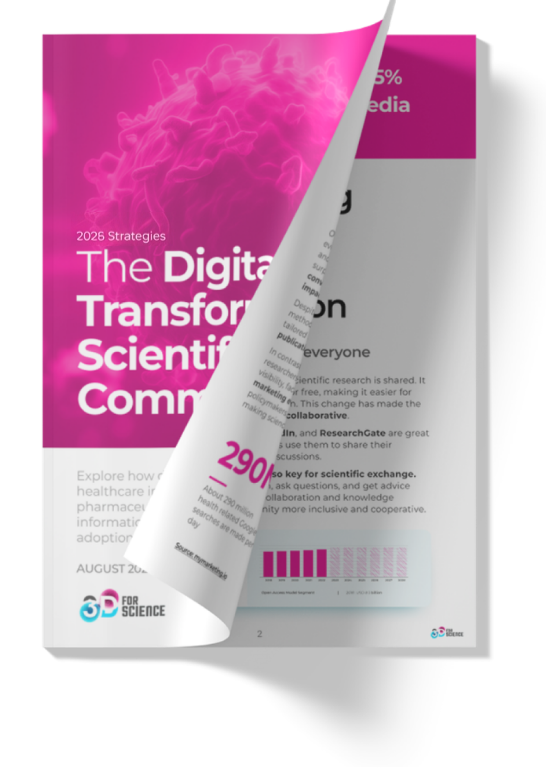
Get this free Guide with
5 key steps for The Digital Transformation
of Scientific Communication
The Power of Personalized Messaging
On the other hand, personalized marketing allows healthcare companies to engage specific segments of their audience with content that resonates. Whether it’s tailoring content based on medical history, preferences, or behavior, personalized messages feel more relevant, improving engagement and conversion rates. In fact, according to a report by Accenture, 91% of consumers are more likely to shop with brands that provide relevant offers and recommendations (FiercePharma).
Benefits of Personalized Communication in Healthcare Marketing
-
Higher Engagement Rates: Personalized communication delivers content that aligns with the specific interests, needs, and behaviors of the recipient, leading to better engagement. According to Salesforce’s State of Marketing Report, personalized emails receive a 29% higher open rate and a 41% higher click-through rate compared to generic ones (Alexander Group).
-
Enhanced relevance: By customizing content for specific audience segments, we can significantly increase the message’s relevance, making it more meaningful to the recipient.
-
Building Trust and Loyalty: In sectors where trust is critical, like pharma and biotech, providing personalized, data-driven communication demonstrates that a company understands the needs and challenges of its audience. This can significantly improve brand loyalty and patient-provider relationships. A McKinsey report showed that companies using personalized communication in healthcare reported a 30% increase in patient satisfaction (Alexander Group).
-
Optimized resource allocation: Targeting specific segments allows for more precise marketing efforts, leading to a better return on investment (ROI).

How Data-Driven Personalization Works in Healthcare
Personalization in medical marketing starts with data. Whether the data comes from electronic health records (EHRs), patient surveys, or behavioral tracking tools, gathering and analyzing insights about the audience is critical. This data allows healthcare companies to segment their audiences and create targeted campaigns that speak to specific patient groups, healthcare providers, or caregivers.
For example, a biotech company marketing a new drug can segment its audience based on factors such as disease type, treatment history, and even geographic location. These segments then receive personalized messaging that resonates with their unique experiences. According to a report by Gartner, data-driven personalization can lift revenues by 10% to 20% in industries like pharma.
In addition to helping craft the message, data also informs the delivery method. Personalized messages can be sent via email, SMS, or mobile apps based on patient preferences. This helps increase engagement, as patients are more likely to interact with content delivered in their preferred format.

The Future of Personalization in Healthcare Marketing
As technology evolves, so too will the ability to deliver hyper-personalized communication. With advancements in artificial intelligence (AI) and machine learning, companies will be able to analyze vast amounts of data more quickly and accurately, leading to even more precise personalization efforts. For example, AI can help predict patient behaviors, such as the likelihood of medication adherence, and tailor communication accordingly.
Furthermore, as healthcare consumers continue to demand more personalized experiences, companies that fail to adopt data-driven personalization strategies risk falling behind their competitors.
Conclusion: Why Personalization is Essential for Healthcare Marketing
In the competitive fields of healthcare, pharmaceuticals, and biotech, personalized marketing is not just a luxury; it’s a necessity. By leveraging data to create targeted, relevant messages, companies can engage their audiences more effectively, build trust, and ultimately improve patient outcomes. The shift from generic to personalized communication represents a fundamental change in how healthcare marketing operates, and companies that embrace this change with the correct and technological tools such as 3D animation, Augmented Reality, or Virtual Reality will be better positioned to succeed in an increasingly digital and data-driven world and at 3DforScience we make you easy to achieve your marketing goals.